Life Update

So I know I’ve been kind of radio silent recently. After all my big plans for this blog life kind of got in the way for a while.

Without going into to much detail I had some medical/ health issues to deal with, which has kind of thrown me for a loop.

On top of that I’m in the process of moving house! Basically I had to hand in my notice, find a new flat, pack and move everything within the last month.

But at last everything will be moved to the new house on Friday, I’m dealing with the medical side of things and life can finally get back to normal!

But until then my kickstarter is still running for another 16 days, the shop is still open and I’m still coming up with some great ideas for future blogs 🙂

https://www.kickstarter.com/projects/wednesdayschildis/the-trouble-with-workers-researching-victorian-clo/widget/video.html

This is the video for my kickstarter you can find the full link here

So that’s a brief update and hopefully I’ll be back soon with more exciting things

Until then

See you in the Future ♥

Good Mood Mondays: Short But Sweet

Ooops! I almost forgot to do a Good Mood Monday’s post today!

I think today is going to be rather brief but good things have happened so yay!

First off, I’ve almost finalised my Kickstarter campaign and plan to launch it this Thursday! I thought it best to start on the first of the month and run it all the way through May 🙂 I will do a big blog post on Thursday to commemorate the launch and I still need to write up the exhibition from last week.

The other brilliant news of today is that the Viking Boy got a job with Rockstar North in Edinburgh!!! YAY this means that he will finish university on a Friday in May and will then start work on the Monday so not a lot of time to relax after uni or adjust to living in a new flat in a new city.

Because obviously we’re going to have to move to Edinburgh (commence happy dance now!) Although I really like Glasgow, I’ve always thought of Edinburgh as my home and I’m so glad to be finally getting back there.

So the coming weeks will be flat hunting and packing for me and final course work and exams for him, in between all that we have some family birthdays, Etsy orders to work on and my Kickstarter to launch.

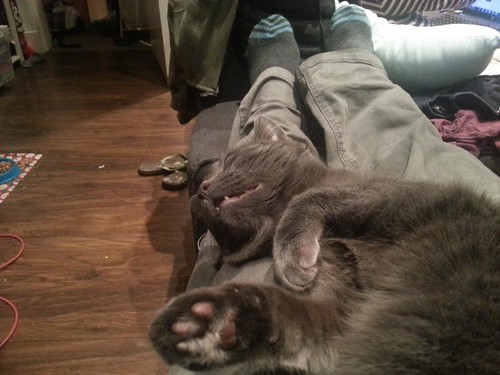
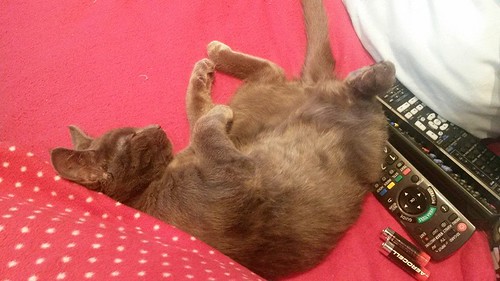
So to apologise for this incredibly short blog post I will leave you with the most obvious space filler on the internet – Cats! In particular a couple of photos of our insane but adorable kitten Maia 😀

DSC07889_zpsbfb30dc1

2014-04-17230912_zpsd887b578   1549572_10151886740935843_206372632_n_zps1b6161ab

Basically when she isn’t running around like a mad wee thing she is lying apparently unconscious in very random places (such as on top of the freezer or under the coffee table.)

I promise the next post will be longer and more in depth,

But until then

See you in the future! ❤

Good Mood Mondays: Sewing Machines, Research Projects And Georgian Gowns

Hi and welcome to this week’s Good Mood Monday!

Today I have been mostly making a silk cravat and trying to figure out how to connect Chartism with the history of working class clothing (more on that later!)

It’s been a fairly disjointed week what with the long weekend over Easter so today didn’t feel much like a Monday. But I thought I would share some interesting things about my week.

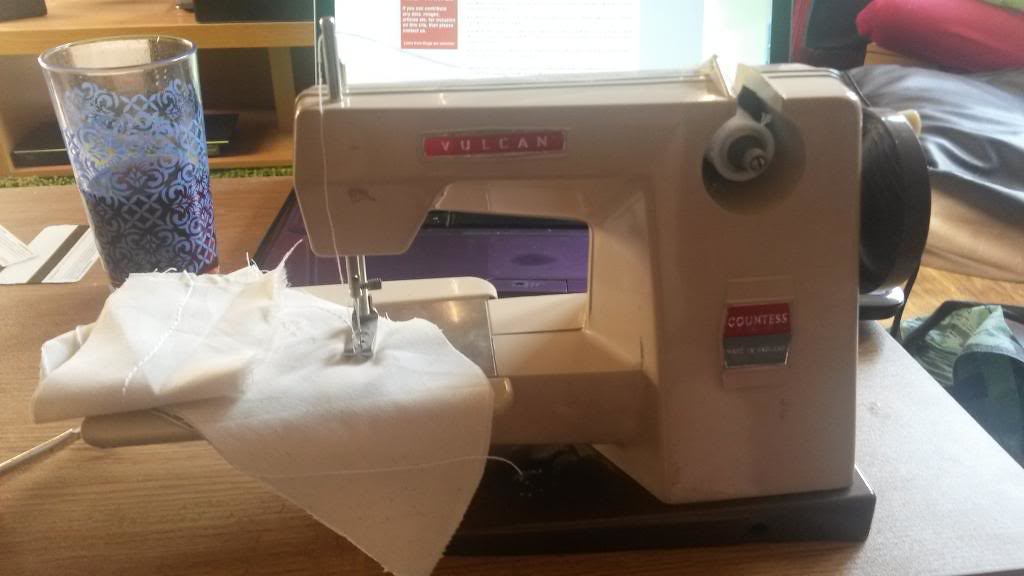
First off, because 8 are not enough, I bought another sewing machine! This one was only £5 out of a charity shop; it’s a Vulcan Countess from 1966. (It’s actually stamped with either June or July 1966 – a bit hard to make out) It was actually produced as a toy for children. It’s a single thread hand crank design which creates a chain stitch rather than using a bobbin thread underneath.

20140418_175414_zpsfbdfc935


Thankfully it’s pretty small and light (I was able to carry it in my bag for most of the day without it getting too heavy) so it’s currently sitting on my bookshelf, waiting to be used!

And now onto the rest of the week!

First off, on Wednesday I found out that my application to Art Trust Scotland had been successful and that I was going to receive some funding towards my big research project into the clothing of the Victorian Working Class. I’ve been wanting to start this project for ages but haven’t had the funds to kick start it but now I can! After being unsuccessful with a different funding application earlier this month I was feeling slightly disheartened about the whole thing but this has spurred me on to actually get moving with it!

I’ve also been greatly inspired by Sarah Goodman of Mode Historique who has been running an extremely successful Indiegogo campaign this month to raise the funds to get her all the way to Platt Hall in Manchester from California in order to study of the last existing Chemise A La Reine gowns for her Masters’ Thesis. So keep your eyes peeled in the near future for my attempt at an Indiegogo or Kickstarter campaign!

This is where my notes about Chartism come in. When I first envisioned this project it was going to be covering the whole of Victoria’s reign from 1837 to 1901. As I started to do preliminary research on the topic I realised that Holy crap that’s a looong time! So I began to diverge slightly and try to figure out a suitable time frame. I didn’t want to just pick a random decade for the sake of it, I decided there needed to be an actual reason for choosing a certain time period, enter Chartism.

This was a movement between 1838 and 1850 of great political and social reforms (or attempts at reforms) for and by the Working class in Britain. Although the official movement kind of ran out of steam by 1850 the legacy lived on well into the 1860s with the Reform Act of 1867(in England, 1868 in Scotland and Ireland) finally enfranchising many urban working class men.

With such a period of political, social and cultural upheaval in Britain affecting such a large portion of the working class I felt it was a perfect place to start my research.

Anyway I’ve started a new page on the website to track my progress and makes notes throughout my research, it’s pretty empty right now but keep checking back as it will (hopefully) fill up very soon!

The rest of the week has been fairly relaxed; I attended an exhibition held at Kelvingrove Art Gallery and Museum called “How Glasgow Flourished” and discussed the changes and growth of Glasgow throughout the Georgian period (1714-1837)

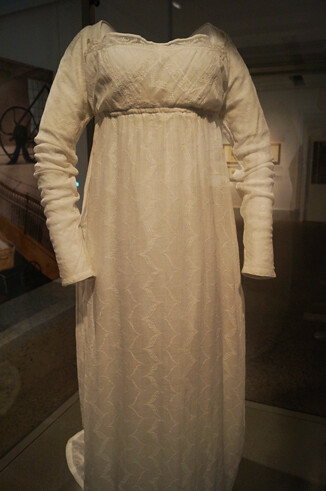
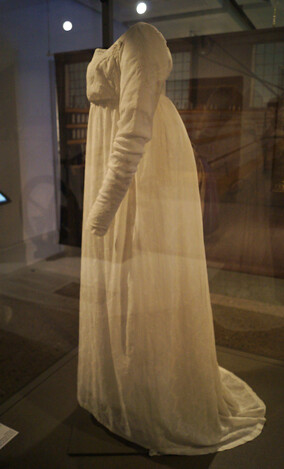
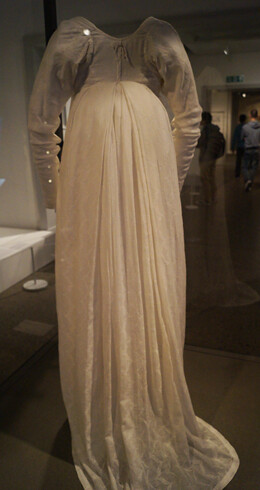
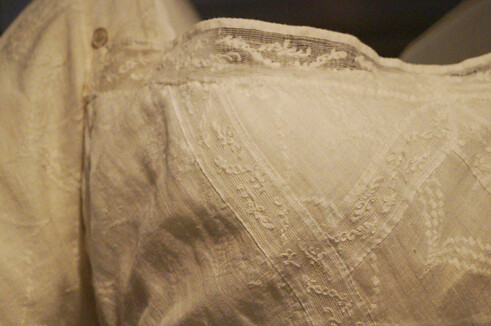
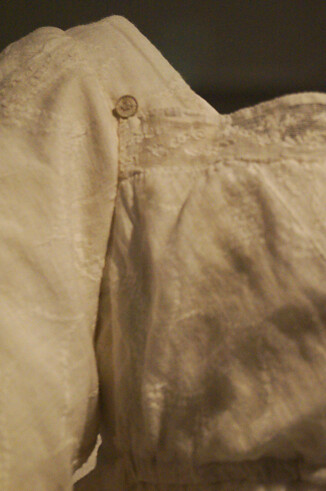
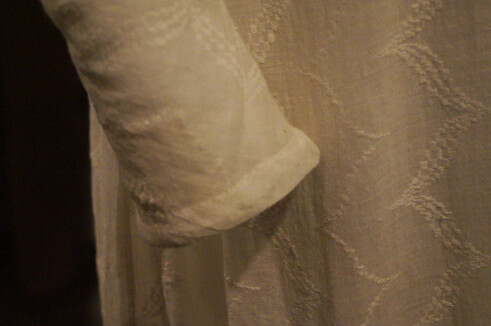
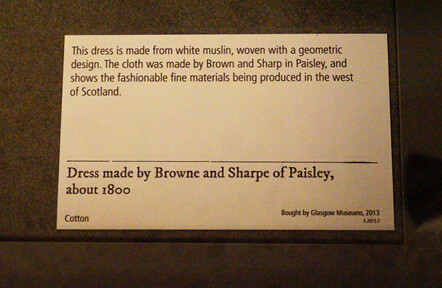
I found it really quite interesting and as planned I will be doing a proper write up fully later this week. One part that I was especially excited about was that they had a couple of extant garments from the period; including a wonderfully embroidered muslin gown made in Glasgow around 1800.

description_zps065bda94

 It is extremely close in design to a gown in Janet Arnold’s Patterns of Fashion 1; a pattern which I was kind of intimidated by and had been considering avoiding. But since seeing it up close on display like that I can now more fully understand the cut and fit so I think it’s definitely one I now feel a bit more confident in trying!

I did manage to get a few photos of the overall design and some close ups of pattern/textile design but the exhibition is on until July so my plan is to go back a few times to try get as many photos as possible to really understand the construction as fully as possible!

DSC08907_zps0fb15893     DSC08913_zpsfbeb212f      DSC08912_zps8e93b28e       DSC08908_zps0cbc24f4       DSC08911_zpsbebcdde5       DSC08909_zpsf1c91d3b        DSC08910_zpse4670c8c         <span style="font-size: 11pt; line-height: 115

What I like most about it is that it was made in Scotland. A lot of my research of the Regency period has turned up pieces from England or Europe, especially since a lot is connected or “inspired by” in some way with Jane Austen. It’s not that there is anything particularly wrong with that but it’s a nice example of the fashions of the time in Scotland.

I realise this has been a bit of a word heavy post rather than having lots of pretty pictures but I promised lots and lots of nice photos in my write up on the exhibition this week!

I hope you all had a lovely weekend and have fun in the week to come,

Until then

See you in the future! ♥


Good Mood Mondays: Hairstyles, Hair Enhancers And Happy Days

So after the exhaustion of Monday I never finished the blog post but I’m posting it today! (Yay) So I shall continue with my write up from yesterday.

Today has been extremely long and extremely tiring; however I did have a lovely day in Edinburgh (although I was blinded by the sun for the most part!)

The Viking Boy had a job interview in Edinburgh this morning and since I know Edinburgh better and it is his first one for a graduate type job I promised to go with him. Unfortunately to get there in time we ending up leaving the house at 20 past 7 this morning (a great struggle since we usually get up around 9 or 10) and rushing from the train station up to Buchanan Bus Station for our bus at 8.15. We made it in plenty of time and pretty much slept most of the journey there.

The interview went well and the boy came out happy with how it had been left. He should hear very soon and then it will be a mad rush to find a flat in Edinburgh, pack and move in the next month not to mention he still has exams to finish before May!

Since we were going to be getting back until about 5 tonight I did most of my Good Mood Monday’s activities over the weekend in preparation for writing it all up tonight to post up for you good people!

First a little update on how my fabric printing experimentation went: very simply it didn’t. It seems the image maker is more suited for doing larger images rather than a smaller repeated pattern as I wanted.

As you can see it leaves a hardened residue from the leftover image make which means the fabric doesn’t sit right AND it kind of fades the actual image I wanted to use.


DSC08675_zps8087b2f5

BUT as I promised it was back to the drawing board and I think I have found a new technique it may take a little longer and be a bit messier but it looks really good!

DSC08679_zpsec239dd0

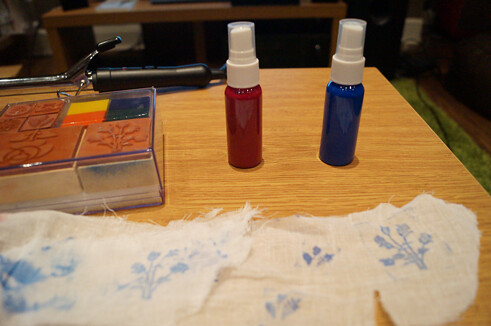
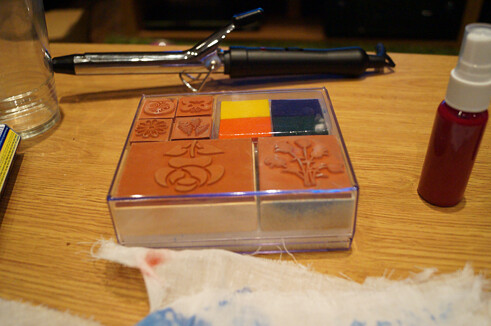
I had the idea of perhaps using rubber stamps to get the image, similar to maybe doing a lino cut, as luck would have it I also came across fabric paints in spray paint bottles which makes covering the rubber stamp much easier.
DSC08680_zpscbb66d44

To avoid wastage I sprayed the paint onto a sponge first then pushed the stamp into it. After a couple of attempts I realised that I had to wipe some of the excess paint off the corners of the stamp to stop them appearing on the fabric. (You can see in the images below some of my earlier attempts. Because I’m using fabric paints it doesn’t damage the fabric and because I used the stamp I don’t have any excess paint to smudge which can sometimes happen when I use stencils.

DSC08678_zpsdfe950d4 DSC08677_zpse1b2f48a

So my plan is to get some plain bleached muslin, enough for doing my next gown and use the stamp and paint to pattern the entire fabric. It might only be a one off or a very special offer for the shop (custom hand printing will cost more I think) but it’s a fun thing to try!

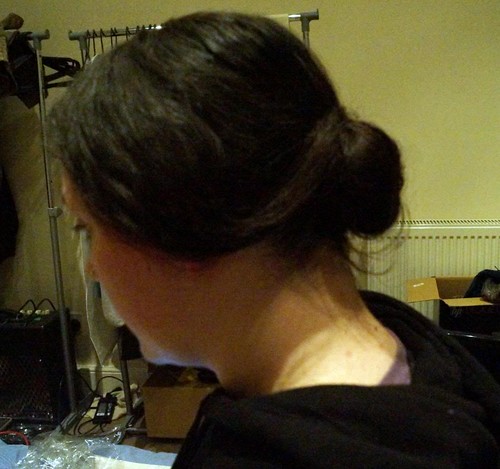
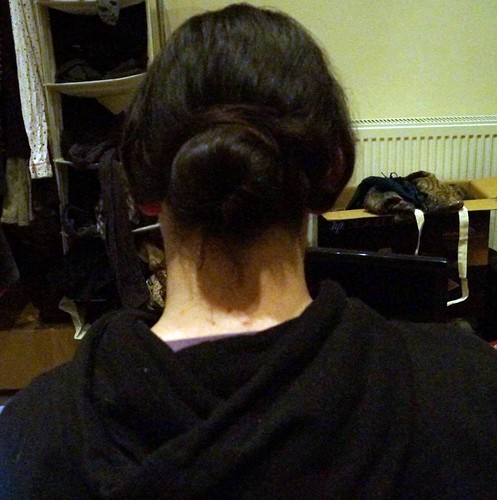
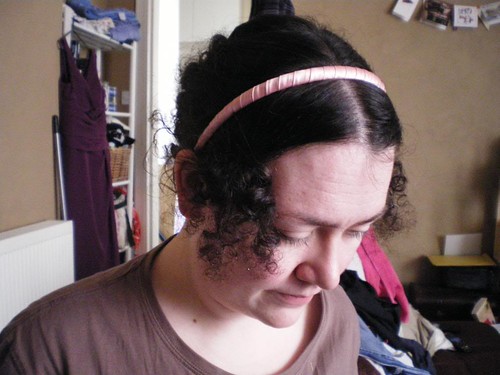
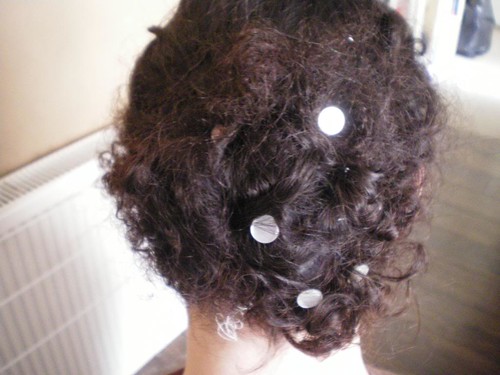
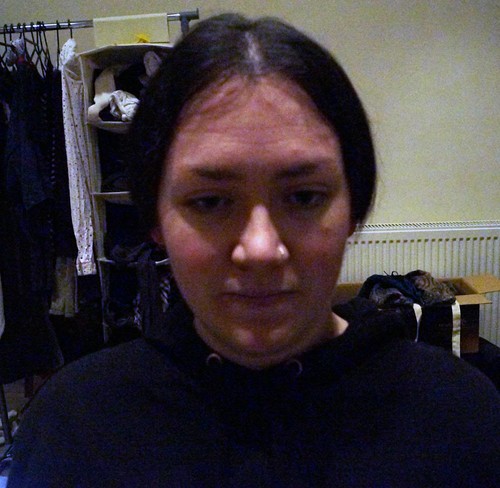
Ok onto today’s topic! While at college we learned the basics of dressing wigs and hair in historical styles and I’ve always loved playing about with weird hairstyle so I recently decided to start creating various styles for my Facebook page.

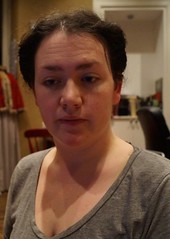
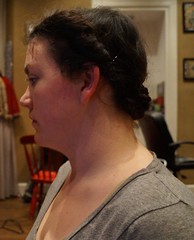
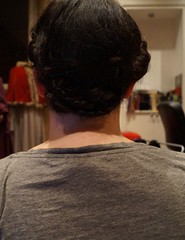
I started off with a very simple 1840s hairstyle inspired by Jane Eyre then used rags to curl my hair for a Regency style. (It is always a bad idea when I decide to rag my hair as the curls are always insane!)
<br DSC04592_zps04ecacbe DSC04591_zpse43bb480  DSC04590_zps5b9aa527
IMGP0093_zps04d94fb2    IMGP0090_zpse64e61b4

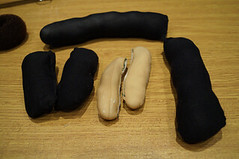
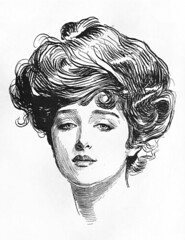
A few months ago I researched how to create hair rats. These are hair accessories used to enhance a style (kind of like people using hair doughnuts today) they tended to be made using actual human hair (the selling of human hair has been a thriving trade for centuries) and were often used to create the bouffant style of the 18th and 19th centuries – they were still being used in the Edwardian era to create the much sought after “Gibson Girl” style. I decided not to use human hair for mine and instead used old tights and toy stuffing to create weird sausage things that I can wrap my hair around!

a4ae5a50929c9b87d8fc06b02db48ff0_zps3c2c3fb2    DSC08683_zps93d612c0   

My first attempts at using the rats were quite successful, I practiced rolling the smaller ones into victory roll style ones to create the height you so often see in Victorian and Edwardian images and photographs.
DSC07514_zps738f00e7     DSC07516_zps701e2aee     DSC07520_zps1290ff1c     DSC07550_zpsbf0e78e6

Today I decided to try a few more styles out. So I was trying to get my hair from this wild and windswept mass of curls:

20140412_160118_zpsbe3ca71b

Into something a little more manageable and stylised

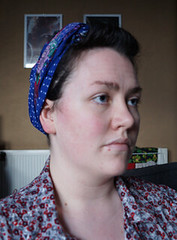
I decided to try a new style this weekend and went for a 1940’s housewife style. I used the rats first to curl my hair up then wrapped a soft scarf round my head in a 1940’s turban style.
DSC08597_zps139a5bbd

As you can see my hair is a bit messy and tangled – sometimes my hair refuses to behave itself, and I hate using products like hairspray. I did a small, victory roll style curl to the front section of my hair and then gathered the rest at the back round one of the larger rats and pinned in place.
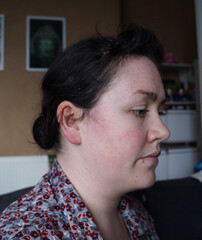
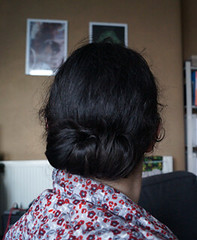
DSC08601_zpsd4491d71  DSC08605_zpsd3f56ba3 

 I think I might need to find a different scarf to use as this one slipped about quite a bit as I tried to tie it.
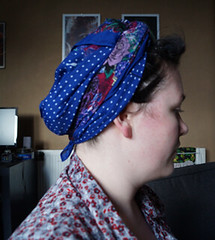
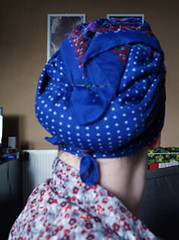
DSC08589_zpsc2e536fb  DSC08592_zpsaaffdf7c

I quite like this style; it’s fairly uncomplicated and has a nice overall effect with very little effort. I think I’m going to look into doing a few more wartime clothing and accessories and this style will look really good with the proper outfits!

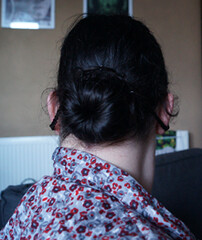
Next was to do another early Victorian style. My hair is quite thin so while its crazy curly, once I brush it out and pleat it up there isn’t much volume to it. You can see this in the next couple of photos, maybe having extensions or something would help the pleats look fuller and work better but never mind!

DSC08616_zpsee16dcfe DSC08609_zps17eb8fdc

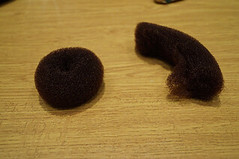
I did the bun at the back using a modern “hair doughnut” and it definitely helps get the shape right, especially given the thinness of my hair.
DSC08687_zps10d6ce82 DSC08617_zps637f87cc  

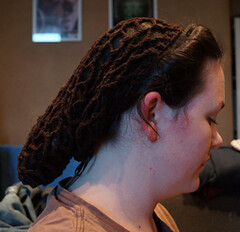
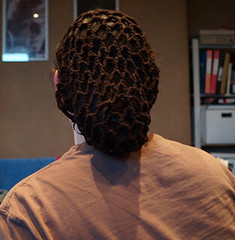
With my final style I wanted to incorporate one of the fantastic Victorian hair snoods that my mum crocheted up for me.

First I curled my hair at the front similar to the way I was first playing about with the rats then instead of rolling up the rest of my hair I pulled up the rest into a quick ponytail thing with a tiny elastic band. I then pinned the snood in place at the front and sides and gathered it with the ribbon under the ponytail, basically covering my whole head and hair, once that was done I reached through the holes of the snood and snapped the elastic band and let my hair drop into the back of the snood.
DSC08665_zps1a3abd9f    DSC08669_zpsd1b543d2  DSC08673_zpsa6bbe71a

It was by this point that my hair really started misbehaving and it was becoming far too bouncy and curly to be able to force it into any shape or style. I am pleased with how my various styles turned out and once I get a few of the books I’m angling after about wig dressing and make up history I’ll be able to try even more!  The next one I do aim to try is the full Gibson Girl style bouffant.
Gibson_Girl_by_Charles_Dana_Gibson_zps23876fae

Ok that’s it for today I think. Going to be wandering around Glasgow with the mammy on Thursday hopefully and then on Friday I’ll be visiting the new exhibition at Kelvingrove!


Until then

See you in the future! ♥

Good Mood Mondays: Experimentation In The Land Of Fabrics

Welcome to the first of my (hopefully) weekly Good Mood Monday posts!

My weekend has mainly consisted of working on orders and tidying up my studio. But today was slightly more exciting (ish.) After getting some run of the mill tasks finished in town this morning I came back to work on a few projects.

overview-craft_zps1075460d

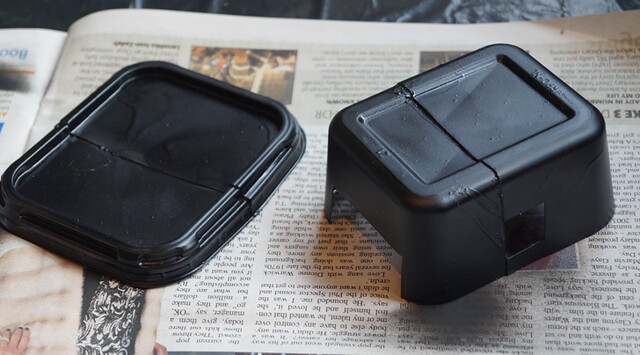
First, I’ve been designing and making an enclosure prototype for the Viking Boy’s final thesis project. Essentially it’s an adapted margarine tub with enamel spray paint on it but it actually looks pretty cool. J

It’s made to hold a raspberry pi. Which is a type of single board computer; it’s actually pretty cool as it’s about the size of a credit card (or a bit bigger once all the components he needs are attached) but is basically the same as a proper laptop or desktop computer. His project is to make a web enabled universal remote controller using the raspberry pi and his phone. Anyway as part of his thesis presentation he wanted the computer to have a cool enclosure to give the idea of what it would be like if it was manufactured as an actual product.

casing-overview_zpsb1747264

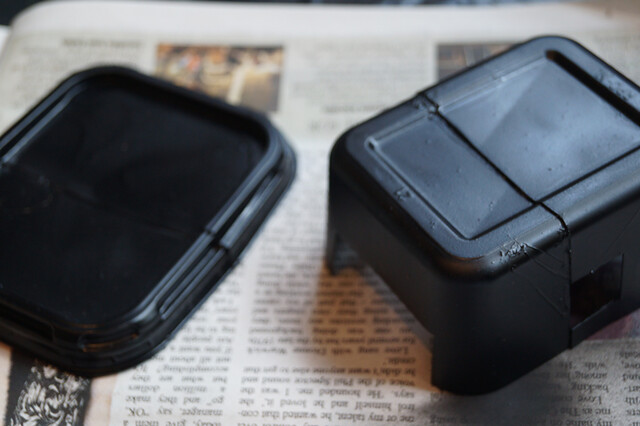
Obviously there is a massive join line across it as I had to cut down the tub, but basically the computer sits on the base part on the left and the part on the right covers all the wirings and components. I’ve cut holes where cables and LED’s need to sit through so it’ll all end up looking fairly neat.

Once the paint is fully dry it should have a kind of matt black look to it, as the Viking Boy wanted it to blend in with the rest of our “home cinema” devices that it would be interacting with.

casing-macro_zps6eb3e96b


While I was waiting for the first layer of paint to dry I decided to get on with another project I’ve been thinking about.

One of the difficulties with trying to make historically accurate clothing is that a lot of the fabric used during the 19th century (including even some colours) just aren’t fashionable or produced any longer. So when reading about regency gowns made of sprigged muslin I realised that it’s incredibly difficult to actually find any muslin fabric printed or embroidered with sprigs sold per meter.Here’s an example of sprigged muslin used in a Regency gown from 1818.

spriggedmuslingown_zps1a12718c

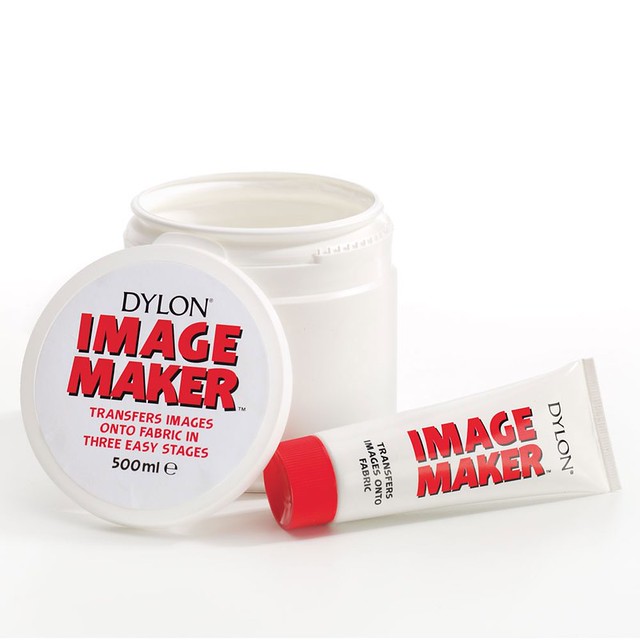
So I’ve been thinking of a way of perhaps printing or making my own (albeit on a very small scale) then I remembered that about 2 years ago I bought this stuff called Image Maker by Dylon


P860I_1_Zoom_zps06849b50

I’ve tried it a couple of times in the past but didn’t actually follow the instructions like I should have so it failed a bit lol so this time I decided to actually do the thing properly!

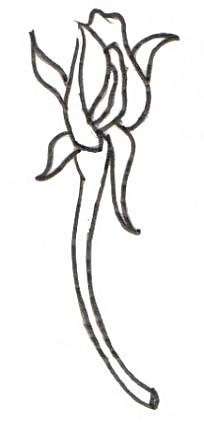
First, I found a basic image of a flower/rosebud sprig and coloured it in good old MS Paint


Summer_-_Rosebud_Pattern_zpse58c9920                              rosebudsprig_zps611bd4cd

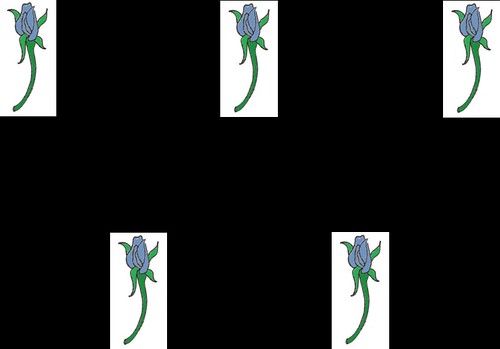
I then used publisher to create the pattern I wanted on the fabric like this:

sprigged_zps63b6d2ae

As I’m planning on making another Regency gown at some point and working on a Regency spencer I decided to test out the design on two different fabrics: one an unbleached calico that I can use as a lining for my spencer and the other some white muslin that will be the basis of my next gown.

sprigged-calico_zps03377004  sprigged-muslin_zps06870cbc

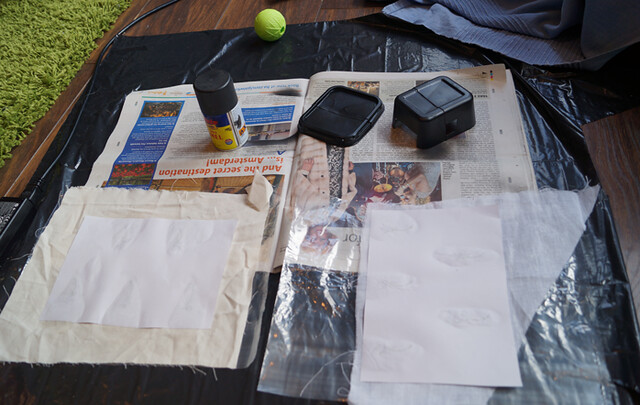
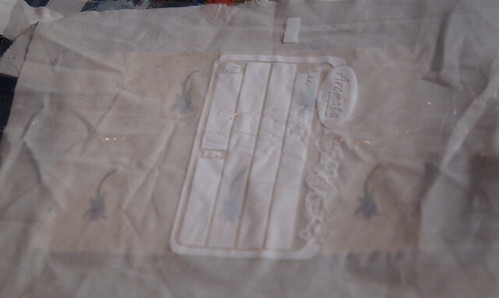
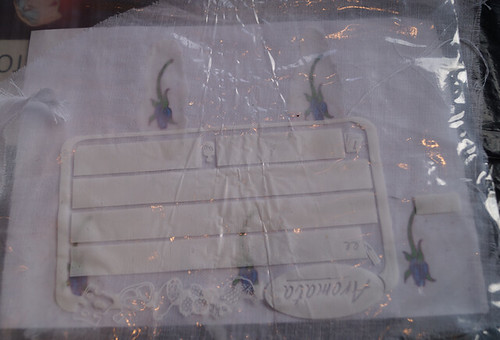
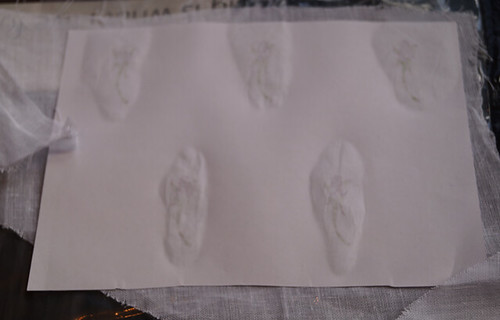
The way the image maker works is that you print out your chosen image mirrored on just basic printer paper. Then you paint on a thick layer of the paste over the image that you want to transfer, so I just painted on each individual rose. You have to use a lot of paste, almost to the point where you can’t see the image anymore. You then press onto the fabric and using a rolling pin, press it fully out making sure to get rid of any air bubbles or wrinkles. I used a plastic bag underneath the fabric to stop the excess paste going everywhere (explaining the weird plastic bag in the photos above!) I left them to dry for a few hours before turning it over to see the paper side.

paper-calico_zps7c130185       paper-muslin_zps7b944119

As you can see from the photos the paper is only stuck to the fabric at the image/roses.

Unfortunately I have to wait at least 4 hours or overnight before I can start working on peeling off the paper so I’ll have to wait until tomorrow to see if my experiment has worked! If it does then I think I will buy more of the image maker and do the whole thing on a larger scale, if not it’s back to the drawing board.

In other news, I’ve found the first exhibition I want to attend for my blog series. It opens on the 18th April at Kelvingrove Art Gallery and Museum and focuses on the Georgians in Glasgow. It’s called “How Glasgow Flourished” and essentially focuses on the lives of people living and working in Glasgow during the 18th and early 19th Century. I’m quite excited to see some costume pieces but also to see some specific pieces about the working classes (something which I think is often lacking in exhibitions) 

GeorgianRotator_zps25ed8edf

While this post hasn’t really focused on pushing forward a good mood, I have at least enjoyed my Monday. Have you? Let me know in the comments how your day has been!


Until then

See you in the future! ♥

Pantaloons part 3 (finally)

After recently receiving a question concerning 18th century breeches through Etsy I thought it was about time to finally, finally finish my write up on my pantaloons/breeches progress. I haven’t found the perfect fabric for the final design yet and since my model is currently neck deep in final projects and thesis writing, I’m holding off on the final making up until graduation. So until then I will finish off the toile and discuss more ideas I have for the very, very neglected blog.

So let’s recap, I had finished the front fall and had the binders neatly attached.  The final product will be a bit different as I plan to fully line the breeches hiding all the nasty seam allowance etc.

<p class="MsoNormal

Press Views, Exhibitions and Tartan Underwear. Part 3

Welcome to the third and final part of the In Fine Style exhibition posts!

Last time I promised to show you the best (but worst) of the exhibition. I introduce the truely absurd accessories and the truely creepy children!

I think I’m also going to be posting some of the photos on Tumblr so I shall give you a link at the end for you to enjoy the photos in their entirety – or you could actually go to the exhibition in Edinburgh, it’s on until July so you have plenty of time 🙂 ok on with the photos.


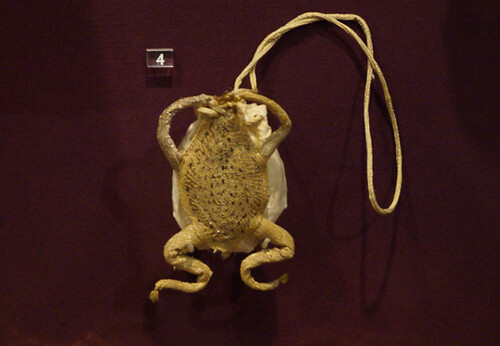
First up some accessories from the frankly bizarre like this frog shaped purse:

frog_zps4f729820

Apparently appreciated for its novelty this would have been popular in the 17th century and made of yellow taffeta and gold thread.

To the most necessary of items a “patch box” for you guessed it storing face patches 😀

patch-box_zps2d4b1fe2

This particular one was owned by Queen Mary around 1694 and is made from gold, enamel and of course diamonds.

Then there are the miniatures, before photographs and facebook profiles we had mini oil paintings of our sweethearts to remind us of their ultimate beauty!

miniatures_zpsbd63799f

miniatures_zpsbd63799f

So clockwise from the top we have:

Queen Henrietta Maria (1632)

William Lord Compton possibly the 1st Earl of Northampton (1600)

Queen Elizabeth 1st (1595-1600)

A “portrait of a lady, perhaps Penelope, Lady Rich” (1589)

Catherine of Braganza (1661)

Anne of Denmark (1611-12)

Elizabeth 1st (1560-1565)

James VI & I (1609-1615)

And in the centre another painting of Catherine Braganza this time by Samuel Cooper (1662)


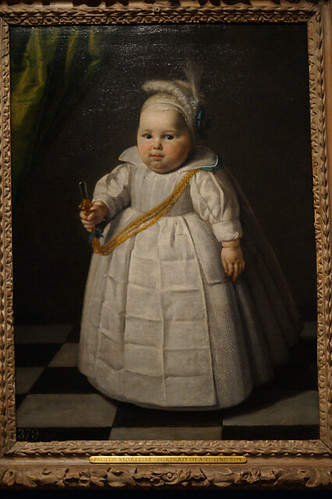
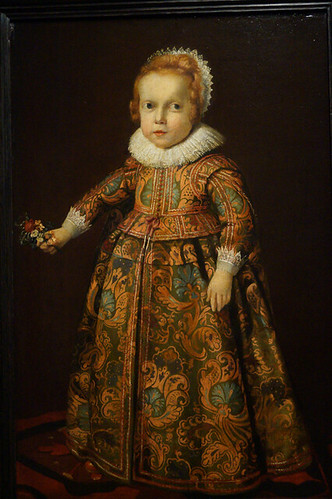
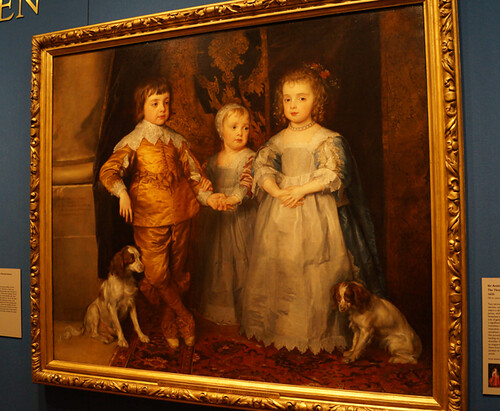
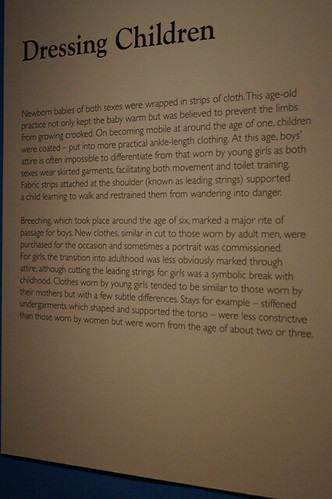
Now onto what I consider one of the creepiest things of historical clothing: the practise of dressing children as miniature adults (this includes putting girls as young as 2 into corsets)

prince-of-wales_zpsc81118b7

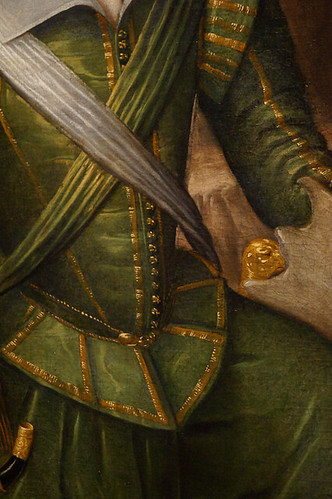
This one of Henry, Prince of Wales in a hunting scene with Robert Devereux, 3rd Earl of Essex is one of the less creepy ones. And is a very clear example of how fashion shows the difference in wealth of the two friends.

prince-of-wales-close-up-1_zps917779bd prince-of-wales-close-2_zpsb1fab308

One the left is the Prince and on the right is the Earl of Essex


Ok onto the creepy!

creepy-3_zpsf121d575 creepy-2_zps16808673 creepy-1_zps1afb0815


creepy-group_zpsccb3ba3a


And a nice wrap-up explanation of children’s clothes during these periods:

creepy-description_zpsbe227d52

As promised here are links to my Tumblr and Facebook which have all the photos I took since I feel like I’ve bored you enough with this rambling.

In other non-exhibition news I finally got round to finished my first regency gown and even made a chemisette to go with it. I plan to be doing a big photo-shoot to get some images for etsy of all my new things I’ve been making recently which includes: two pairs of Victorian women’s drawers (or bloomers); another Mens regency shirt to go with my existing Jacobean one; a Victorian corded petticoat; an 1840s/50s chemise; a sleeveless regency chemise and a couple of chemisettes! To give you a taste of things to come here is a quick glance of one of pair of drawers:

20140316_180158_zps68ee1751


Well I guess that’s all for now, I am planning on blogging more often this year, then again I say that every year but let’s hope I can actually do it this time!

Until then

See you in the future! ♥

*I asked on facebook what you would call a group of photographers and my lovely friend Jenny came up with the brilliant “capture” name 😀

Press Views, Exhibitions and Tartan Underwear. Part 2

Welcome to Part Two of my report on my first Press View experience!

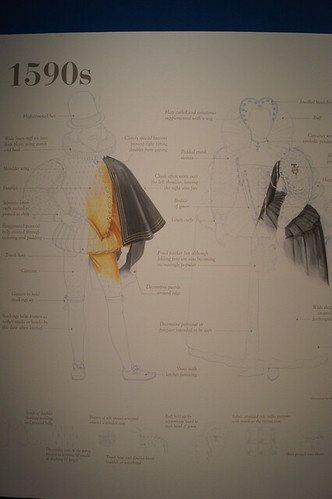
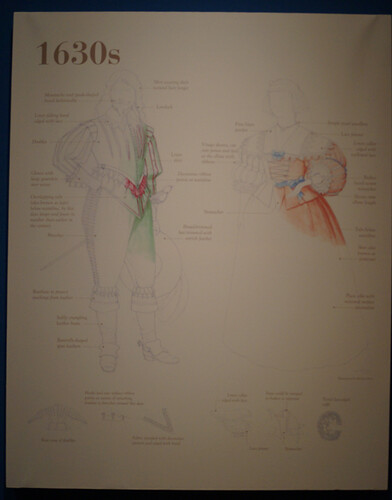
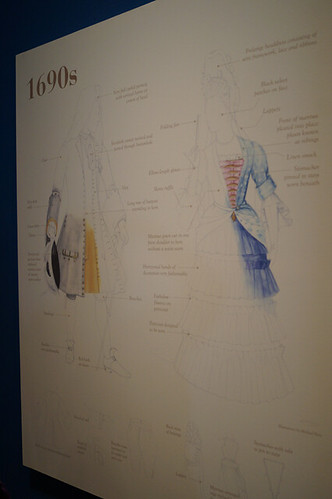
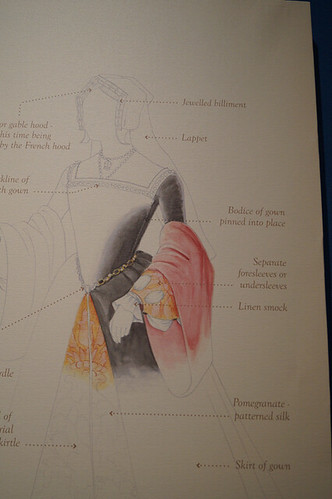
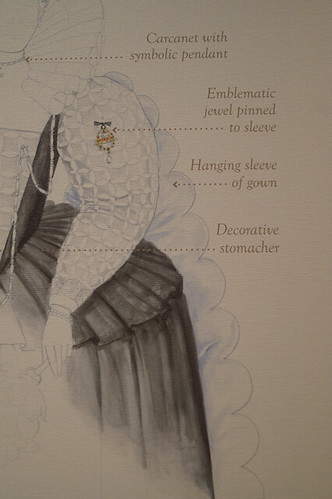
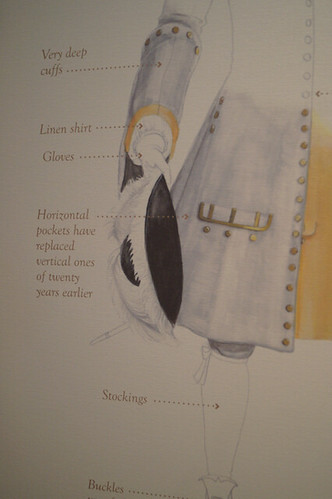
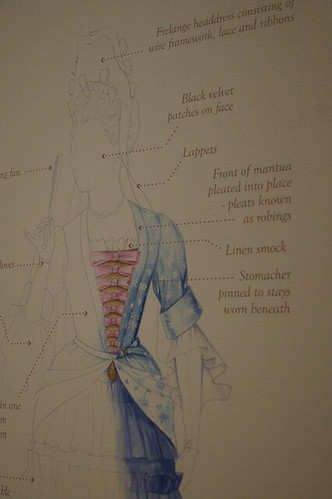
Anyway back on with what was actually in the exhibition! They had a few wonderful annotated illustrations of the changing silhouettes for both men and women. They were the kind of thing which would have been perfect for my history files at college (and yes 7 years on I still think of things in terms of how useful they would be at college).

1540s-overview_zps49492cd8

1590-over_zpsefe856eb

1630-overview_zpsee70b481

1690s-overivew_zps44271dbd

1540-mens-doublet_zps07a00991      1540-womens-dress_zps33f82e55

1590-close-man_zpse487c427 1590-women-overview_zps800fa25a

1590-women-overview_zps800fa25a 1690-mens-coat_zps98c067ae 1690-womens-dress_zpsfc314144

The staging of the exhibition was really wonderful. It’s being held at The Queen’s Gallery at Holyrood house opposite the Scottish parliament in Edinburgh (another perfect excuse for me to head to Edinburgh for the day). I’ve never been there before and it is pretty awesome. The outside architecture is one of the perfect examples of gorgeous stonework in Edinburgh and the interior is pretty amazing too. When you walk in you’re greeted with an awesome sweeping staircase diverging in two directions at the top. It has wooden floors a gold gallery handrail thing looking over the stairs and kind of feels like it would be a brilliant place for very posh and very rich parties. It took me about 20 minutes to realise that there was a kind of system in place, where the earlier pieces started at the top of the right hand stairs and went round the room with the later pieces finishing at the start of the left hand stairs. (A very sensible arrangement if you actually paid attention when walking in – but the whole terrified of being judged thing kind of makes sensible thought a bit difficult!)

Anyway the whole layout kind of sweeps you round through the centuries, with the aforementioned annotated illustrations helping to mark your movements.

Ok this is end of part two! I’ll finish off with my favourite (but kind of the worst) part of the exhibition. You’ll have to tune in to see what I mean!

Until then,

See you in the future! ♥

Press Views, Exhibitions and Tartan Underwear. Part 1

I can’t believe this is my first blog entry of 2014. I apologise profusely for my absence. But I bring good tidings and lots of lovely photographs!

So I’ve been trying to write this post for over a week. Apparently when I don’t think anyone will read my blog I can ramble and write for ages but the minute I think people will actually read this thing my brain insists that I’m going to be judged harshly and freezes up. I’m trying to get past this so let’s get this thing written!

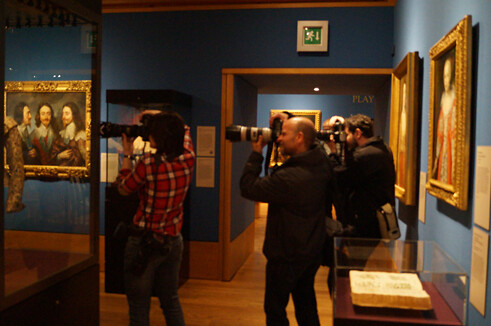
A few weeks ago I was contacted by the lovely people at The Royal Collection trust asking if I’d like to attend an exhibition press view for my blog. Obviously I said yes. The exhibition is called In Fine Style: The Art of Tudor and Stuart Fashion and as you might expect features paintings, clothing and accessories depicting fashion during the 16th and 17th centuries and how they impacted social standing, religion and family life.

Having never been to a press view before I had pretty much no idea what to expect and was pretty terrified of turning up and looking foolish in front of a large collection of people, mostly professional journalists


journalists_zpsf0adbf65
A “capture” of photographers*

As it turned out, they were all pretty much too busy being professional and doing their jobs to actually notice me so I was free to wander and photograph to my heart’s content. (Although I was very careful about not getting in their shots and hiding from the camera crew from STV doing an interview with one of the curators)

Although we studied 17th century at college I’ve always been more interested in 19th century clothing and society so don’t really have any extended knowledge of the period, it was really interesting to see an exhibition focusing on how much of an impact clothing and costume had during that period. These kinds of exhibitions are lacking as a whole I think. Although clothing is taken as a small part when discussing historical periods most exhibitions don’t focus on clothing as being such an integral part of society and standing.

Although the number of existing pieces on display was small – understandable after almost 400 years; the pieces that were there are perfect examples of how much work went into clothing and how time consuming it was for the dressmakers (or wives or servants) of the time.  And you’ll know if you’ve ever read my North & South post, if there is one thing about historical costume I LOVE it’s the time consuming details 😀 

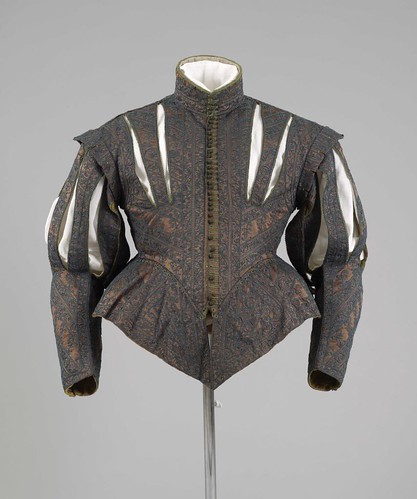
Like this gorgeous men’s doublet from around 1625-30 and thought to have once been owned by Charles I :

300000CF028766_zpsc3a6f9c7
Lent by Grimsthorpe and Drummond Castle Trust

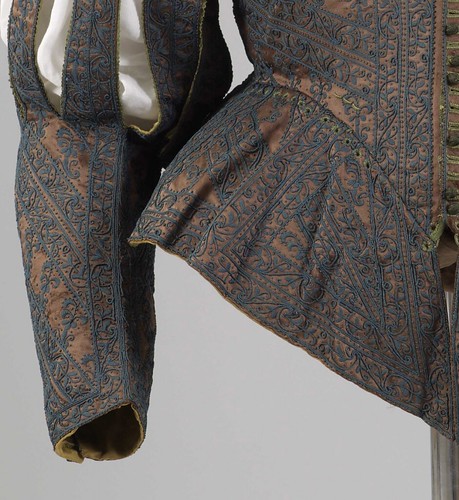
Because of permissions regarding loans etc. I wasn’t able to get a really close up photograph of the embroidery details of this but it is absolutely stunning. And with a little jiggery pokery in photoshop I was able to zoom in the official photograph I was given so you can actually see the amazing stitching.

doublet_zpsa06ae9af

It has a gorgeous brown base fabric with incredibly detailed blue stitching detail, hand bound button holes (obviously, since the sewing machine wasn’t around for another maybe 200 years) and fully lined in a corresponding fabric.

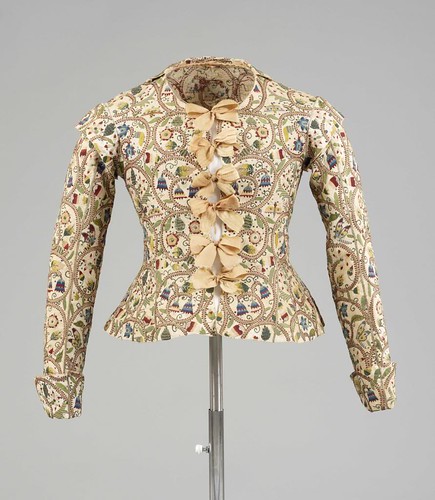
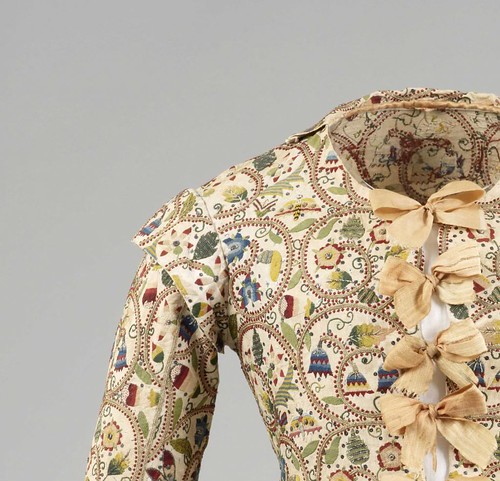
Also on display were some absolutely gorgeous pieces along with a couple of wonderful illustrations of the changing silhouettes throughout the period. Another piece I wasn’t allowed candid photographs of was this wonderful bodice (known in the period as a waistcoat)

300001CF028788_zps2c921b47
Courtesy Fashion Museum, Bath and North East Somerset Council

Again a gorgeous example of intricate hand embroidery in the waistcoat which is from around 1610-1620

300001CF028788_zps91b1e80b

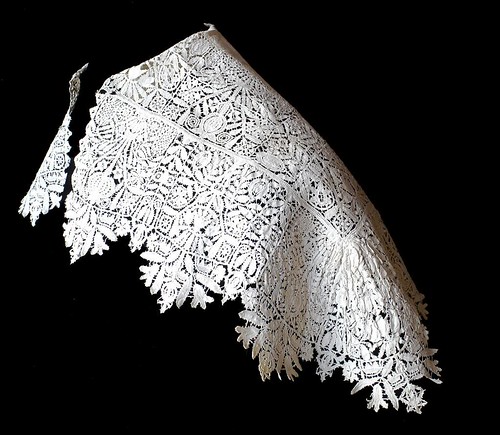
And you really don’t get much more time consuming or detailed than this amazing handmade lace collar or “cloak band” from around 1635 which uses a mix of needle and bobbin lace. (Again once thought to be worn by Charles I)

300012DSC_0065a_zps543d1af9
The Bowes Museum, Barnard Castle, UK. The Blackborne Lace Collection


I always think that this type of collar and this kind of silhouette typifies men’s fashions during the 17th century.

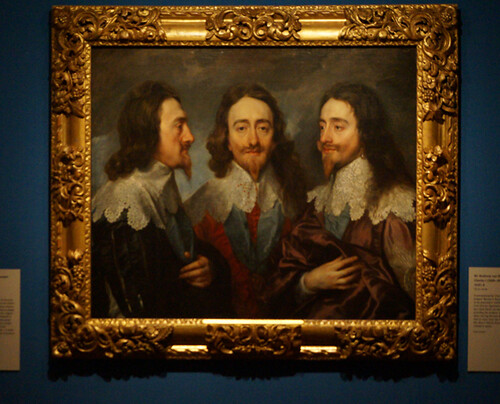
The same type of lace collar can been seen in this painting by Anthony Van Dyck (who also kind of typifies this period in terms of his work, style and influence) of Charles I around 1635/36

van-dyck_zps2016f408

The only downside, which wasn’t the fault of the collection or the staging of the exhibition, was the lack of examples of the clothing and accessories worn by the lower classes. This will be for many reasons, the fact that in lower classes – especially the working class – clothes were worn, repaired and passed down until they were literally unusable as anything other than rag so it’s unsurprising there are very, very few existing examples of the clothing of that period.

Another reason is cost. There are certain pieces in the exhibition where the clothes made for the portrait actually cost more than the painting itself, and even that would be expensive. The lower classes simply couldn’t afford to have portraits produced for their enjoyment. 

james-v_zps7f4eb1e6 james-v-close-up_zps513daa9b

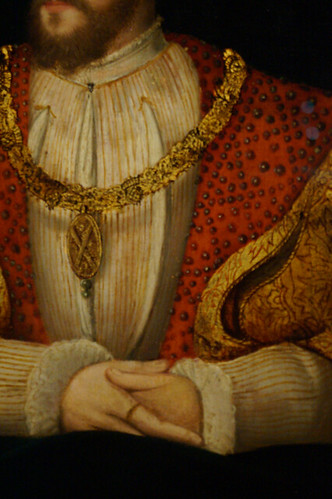
Like this piece of James V around 1540. The sleeves of outfit are made from fabric woven from gold thread while the collar is encrusted with pearls. Apparently, “His wardrobe inventory of 1539 describes a gown with a hood and collar ‘stitched with 49,500 pearls’” Just slightly out of the price range of your average farm worker or servant. :S

 During the 17th century it also wasn’t very common for famous painters to focus their work on representing the lower classes. Many artists of the time were supported by rich benefactors who had no interest in seeing artistic representations of workers and peasants.

Apparently my website doesn’t like crazy long blog posts so I’m going to have to do this in a few parts!

So until then

See you in the future! ♥
*I asked on facebook what you would call a group of photographers and my lovely friend Jenny came up with the brilliant “capture” name 😀

Exciting New Projects

So I will as promised complete my pantaloons post this week. I even drafted the new pattern to fit my model (AKA the Viking Boy) so will be getting on with that shortly.

But now I have an exciting project to discuss.

I’ve been thinking for a while about creating a project/exhibition looking at the kinds of clothes working class people wore during the 19th century. It’s all too easy to find example of gorgeous high fashion pieces in museums and archives, but I want to focus on the clothes people wore every day. How clothes were used at work, rest and play, and what happened when those clothes lost their usefulness.

Another important part of my idea is to focus on Scottish culture and history. The romanticism of Scotland was born out of the 18th century and came to full strength throughout the Victorian Era. The idea of the bonnie Scotsman with his kilt, sporran and tam o’ shanter bonnet completely ignores or at the very least glosses over centuries of history, culture and communities.

My very basic plan so far, which will I hope develop further as I investigate the project is to create sample reproduction pieces to show the type of clothes and the type of fabrics etc used. I also want to include oral and visual examples too, so memories of communities (such as mining or milling) and photographs. I know that obviously a lot of these memories won’t be first hand (unless I can find a few people over 100) but hopefully I can use family stories and memories to create ideas of what life was like for working class families during those times.

I would hope that the eventual outcome of this project is inspire, educate and preserve part of our history. Or at the very least Scotland’s history 🙂

Anyway now I come to a request. Do you have stories of grandparents/great grandparents living in city tenements and working in factories? Or stories from smaller mining communties that you would like to share? And since I plan to recreate many items of clothing, I would love copies of old family photographs mostly from around 1830-1860 but any and all photographs would be great (basically anything from 1830 onwards!)  I’ll be using them get an idea of the atmosphere and character of the communites and people. I will also use some as reference for recreating some pieces.

There is as yet, no timescale for this so I can’t guarantee when or if these photographs will be used but I will continue to update as I try to move forward with this project 🙂 I will however give name credit in the final project, to all who participate and support this idea 🙂

So if you think you can help, email me at mail@wednesdayschildis.com

Until then

See you in the future  ♥